
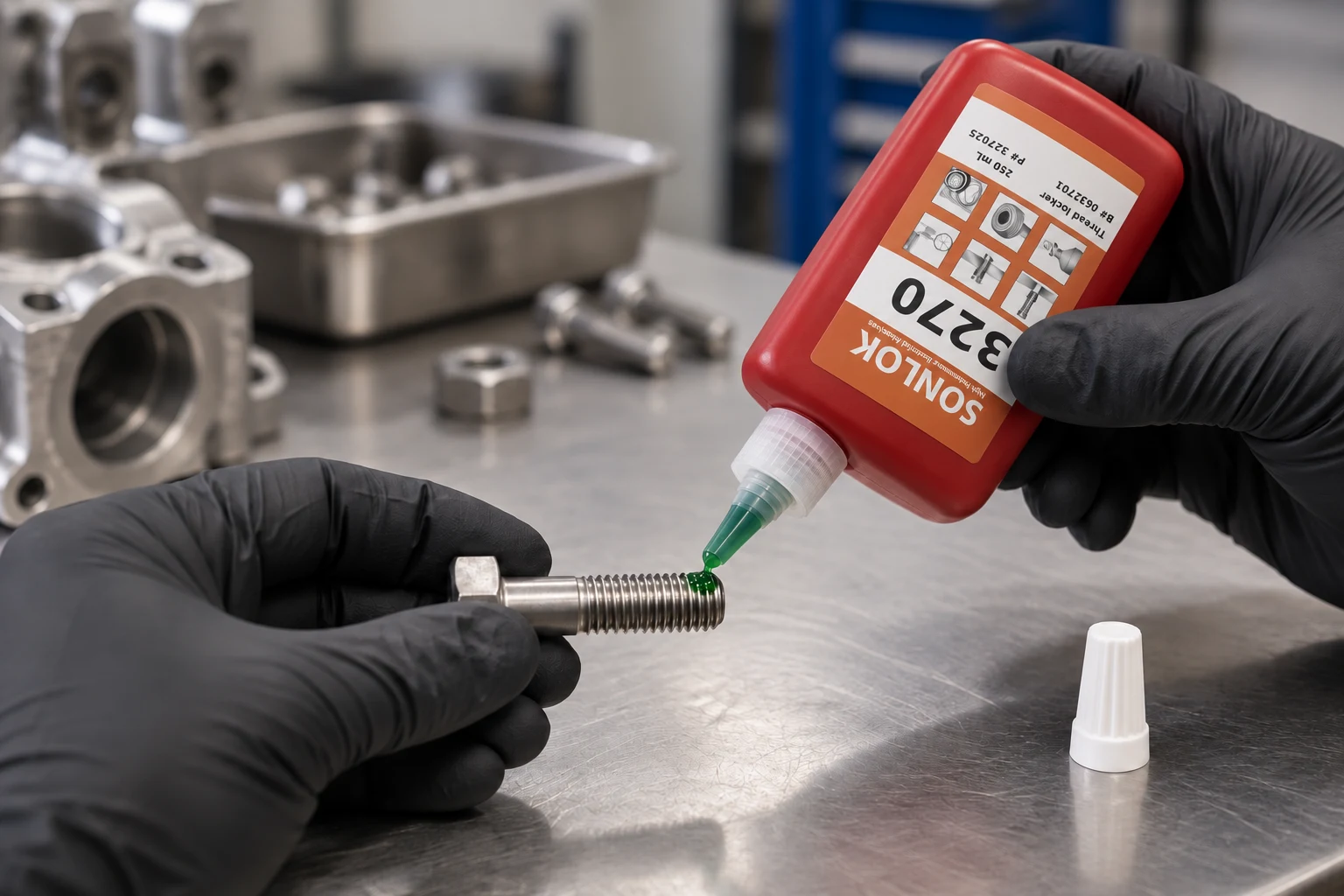
One cure mechanism, different jobs
Anaerobic adhesives cure when confined between close-fitting metal surfaces in the absence of air. The grade must still be chosen for the geometry and the required performance of the joint.
Threadlocking
A threadlocker helps secure a threaded fastener against loosening. Select strength around fastener size, service conditions and whether the assembly needs routine disassembly.
Retaining
Retaining compounds are used between cylindrical parts such as bearings, bushes and shafts. Diametral clearance and surface condition are essential selection inputs.
Gasketing and thread sealing
Rigid flange faces and threaded pipe fittings present different sealing geometries. Use the corresponding grade family and confirm compatibility with the fluid or gas and operating conditions.
Treat cure time as a process variable
Cure behaviour can depend on substrate, gap and temperature. Do not treat a catalogue fixture-time figure as universal. Confirm the current TDS and validate your assembly.
TAKE IT INTO YOUR PROCESS
Choose the application family first, then narrow by strength, gap and service conditions.
Build an application briefGeneral application guidance. Follow the current grade-specific technical and safety data sheets, and validate the finished assembly.